Naturally preserved
Traditional recipe
Tangy and spicy flavour
No artificial additives
Couldn't load pickup availability
Alert me if this item is restocked.
We often restock popular items or they may be returned by the other customers. If you would like to be notified when this happens just enter your details below.
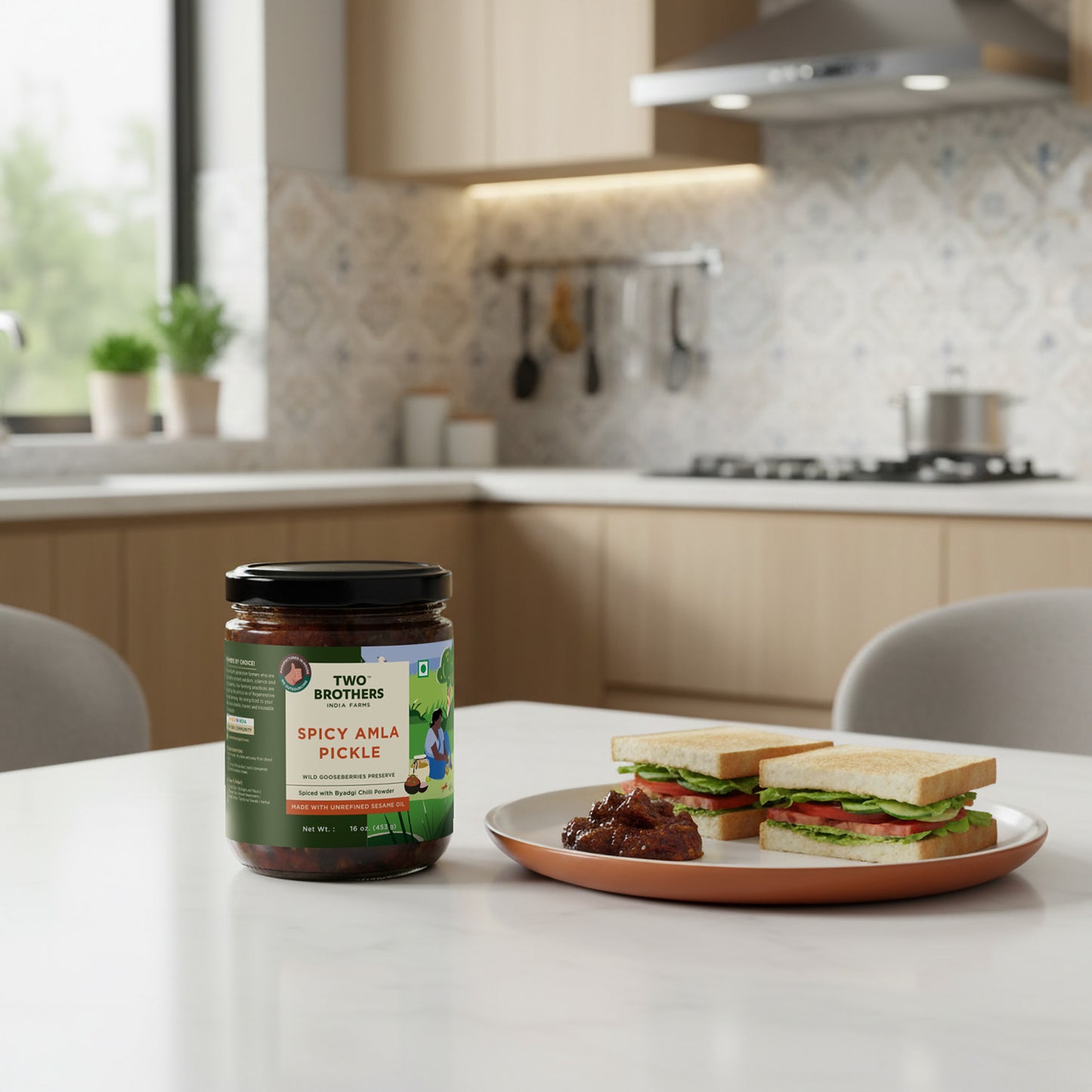
Two Brothers Spicy Amla Pickle | 453g
We respect your privacy and don't share your email with anybody.
Alert me if this item is restocked
Product Highlights
This spicy amla pickle is made with farm-fresh Indian gooseberries, hand-pounded spices, and unrefined sesame oil for a bold, layered flavour. Traditionally prepared in small batches, it balances tang, heat, and depth, making it an easy way to add character to everyday meals. Naturally rich in vitamin C and antioxidants, amla has long been valued for its nourishing qualities. Free from additives, preservatives, and synthetic vinegar, it is a cleaner, more authentic take on a classic Indian pickle.
Ingredients : Amla (Indian Gooseberry), Chilli Powder, Mohri Dal (split mustard seeds), Black pepper, Fenugreek seeds, Asafoetida, Sesame Oil, Himalayan Pink Salt and Unrefined Rock Salt.

Frequently Asked Questions
What allergens does this contain?
This product contains sesame and mustard. Anyone with an allergy to these ingredients should not consume this product. Please read the full ingredient list carefully before purchasing, particularly when buying on behalf of someone else.
What is amla?
The Indian gooseberry — a small, hard green fruit with a sharp, astringent sourness quite unlike a European gooseberry. It is too tart to eat raw for most people, which is why it is almost always pickled, candied or juiced.
What does it taste like?
Sour first, then bitter, then the chilli and mustard arrive. Amla has a distinctive astringency that briefly makes water taste sweet afterwards. It is the most challenging pickle in this range and the one people either take to straight away or not at all.
How is it preserved without vinegar?
Through salt, oil and slow fermentation, which is the traditional method. The salt draws liquid out of the fruit, the acidity that develops does the preserving, and the layer of oil on top seals it from the air. No vinegar, artificial preservative or added colour is needed.
How do I eat it, and how much?
A teaspoon at a time, alongside something plain — rice, a lentil dish, plain yoghurt or warm flatbread. It is intensely salty and sour, so it works as a condiment rather than a side. Always use a dry spoon and keep the pieces under the oil.